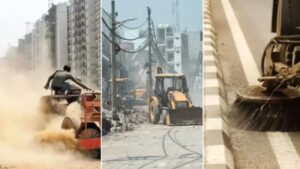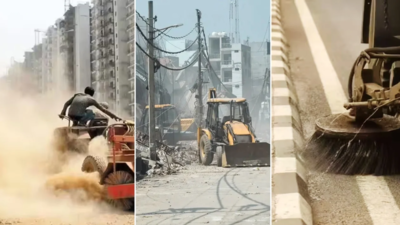
NEW DELHI: An examination of road dust, construction violations, mechanical sweeping and whether Delhi’s civic agencies are addressing the sources of pollution or merely suppressing it after it becomes visible.Delhi’s annual battle against air pollution has brought a familiar set of interventions to its roads: water sprinklers, anti-smog guns, mechanical road sweepers and intensified cleaning drives. Yet, despite these measures, dust continues to accumulate along roads, construction material remains a concern, and civic agencies face questions over enforcement. The challenge is not simply to remove dust from the streets but to prevent it from becoming airborne in the first place.
Where dust control falls short
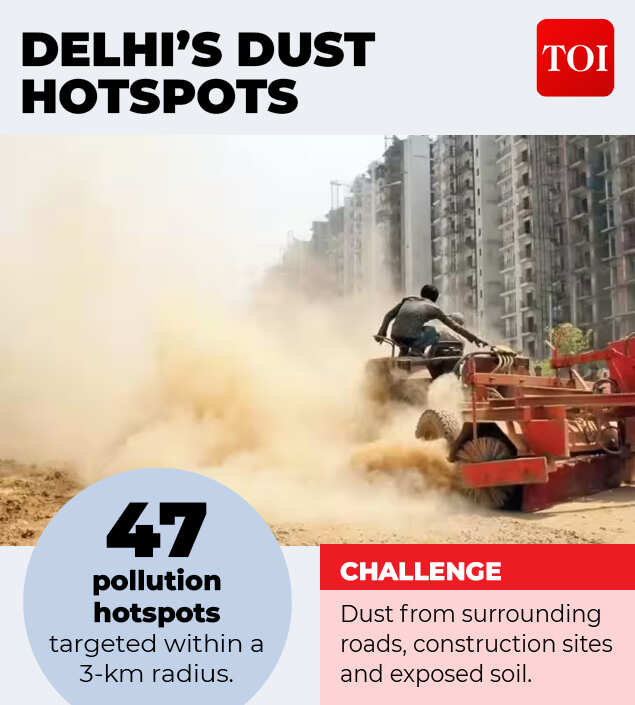
Recent reports reveal a gap between the scale of Delhi’s dust-control efforts and the persistent problems on the ground. While government agencies are expanding their equipment and targeting identified pollution hotspots, studies and inspections point to poor road conditions, inadequate mechanised cleaning, uncovered construction material and illegal dumping as continuing sources of pollution. The central question is whether the capital is moving from visible dust suppression to sustained control of the sources. The hotspots: Where does the dust come from?Delhi’s pollution hotspots are not necessarily affected by a single source. Road dust, construction activity, traffic movement, waste dumping and exposed soil can combine to worsen local air quality. Areas identified in previous hotspot assessments include Anand Vihar, Bawana, Mundka, Wazirpur, Rohini, RK Puram, Okhla, Jahangirpuri, Punjabi Bagh, Ashok Vihar and Dwarka.In October 2026, PWD introduced a strategy to identify and tackle dust sources within a 3-km radius of 47 pollution hotspots. The approach recognises that cleaning a particular road or installing dust-suppression equipment at one location may not be enough if loose soil, uncovered construction material or excavation nearby continues to release particles into the air.
Delhi’s dust hotspots
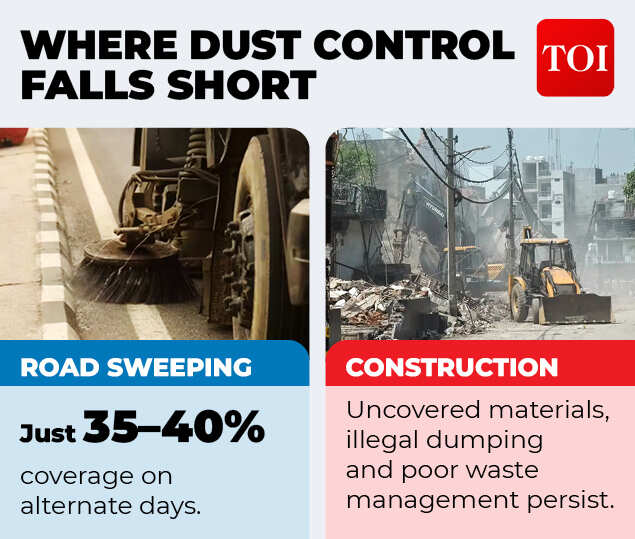
The identified hotspots include Anand Vihar, ITO, DTU, Dwarka, Bawana, Pusa, IGI Airport, IIT Delhi, areas near JNU, Burari Crossing, North Campus and Alipur. The department also planned to deploy around 200 anti-smog guns as part of its dust-control measures.This wider approach is significant because pollution does not stop at the boundaries of a designated hotspot. Dust generated by construction, traffic or exposed surfaces in surrounding areas can travel towards roads and neighbourhoods where suppression measures are already in place.The scale of the challenge is also reflected in the Commission for Air Quality Management’s hotspot exercise. A report on September 2026 said an earlier assessment had identified 65 major pollution sources across 13 hotspots. Of these, 16 had been resolved, while 43 remained under monitoring and six were pending. Authorities had also identified 4,555 minor pollution sources, including road dust, garbage and construction-waste dumping, potholes, unpaved roads, traffic congestion and open waste burning. Nearly half of these minor problems had been addressed at the time of the review.These figures point to the scale of the task: identifying pollution sources is only the first step. The effectiveness of the strategy depends on how quickly the problems are fixed and whether the fixes last. Road sweeping: The gap between deployment and coverageMechanical road sweeping is one of the most direct ways to remove accumulated dust before passing vehicles push it back into the air. However, the coverage of these machines remains a major concern.A report published on October 23, 2026, said a CAQM assessment found that mechanical road sweepers were cleaning only 35–40% of Delhi’s large and medium-sized roads on alternate days, against the prescribed norm of covering the entire road network. Delhi had nearly 100 machines, compared with the 172 required.The assessment also found that a machine covered up to 30km a day, against a requirement of 40km. Roads obstructed by encroachments or illegally parked vehicles posed another challenge. Meanwhile, around 70% of Delhi’s road network consists of roads less than 10 metres wide, which are currently swept manually.
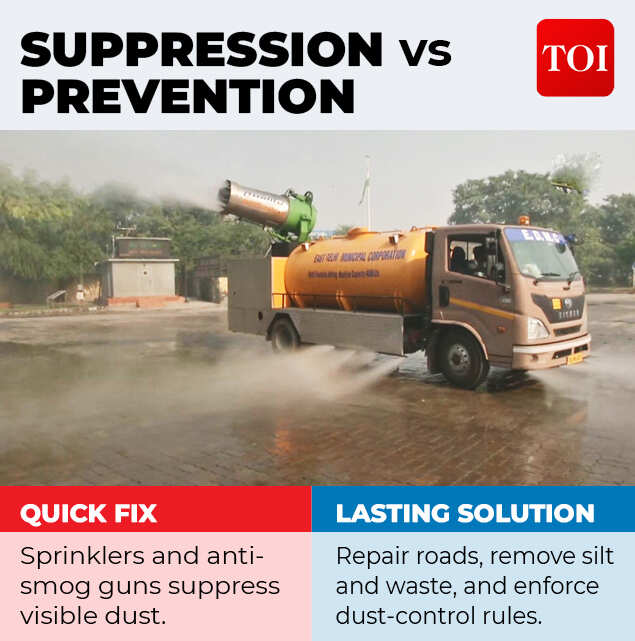

Supperssion Vs Prevention
This exposes a fundamental weakness in the city’s dust-control strategy. Deploying machines is not the same as ensuring that every vulnerable stretch receives adequate cleaning. If road edges and medians continue to collect dust, or if the material lifted during sweeping is not removed, the pollution source remains.The problem was highlighted during a 2023 inspection by then Delhi lieutenant governor VK Saxena. A report said thick layers of dust and loose silt had accumulated on pavements and footpaths along stretches near the Red Fort, Rajghat, ITO, Pragati Power Plant, IP Estate and Millennium Park. Passing vehicles were stirring up the dust, while mechanical sweepers were also found blowing dust instead of suppressing it with water. Officials were directed to clean the streets and pavements and take remedial measures at power plant yards and bus depots.The implication is clear: the effectiveness of road sweeping depends not only on the number of machines but also on how they operate, whether they cover the required stretches and what happens to the dust they collect. Construction sites and waste: Enforcement remains the testConstruction and demolition activity presents another challenge because exposed soil, uncovered materials and improperly stored waste can release dust into surrounding areas.A report on March 2026 said the Prime Minister’s Office had flagged serious lapses in Delhi’s dust-mitigation measures and warned of strict action against officials for negligence. Discussions among officials covered road dust, poor waste management and delays in grievance redressal.The Municipal Corporation of Delhi said it was removing construction and demolition waste from roadsides and vacant plots on a war footing. However, district authorities cited limited mechanised sweeping in residential areas, shortages of capsules at fixed compactor transfer stations and difficulties in deploying heavy machinery in narrow lanes.The difficulties are not new. During a November 2025 meeting, MCD councillors flagged unauthorised construction despite restrictions under Graded Response Action Plan Stage III, illegal dumping of construction waste and the burning of leaves. They also alleged that water sprinkling and mechanical sweepers were being deployed only in selected wards, leaving other areas neglected. The committee chairperson acknowledged that potholes were visible across the city and that accumulated dust was hardly being lifted after sweeping.These concerns raise questions about the consistency of enforcement. Rules requiring construction materials to be covered or dust to be suppressed cannot deliver lasting results if violations continue or inspections fail to secure compliance.In October 2026, MCD stepped up monitoring by installing 360-degree cameras at all 125 construction and demolition waste sites, with live feeds to the Delhi Pollution Control Committee. It also introduced procedures for covering or wetting dumped material, installing dust barriers and ensuring that vehicles transporting construction waste are fully covered. Joint enforcement teams were tasked with acting against dust pollution, illegal dumping and biomass burning.These measures offer a way to move beyond periodic inspections. But their value will depend on whether monitoring leads to timely action against violations and whether the same locations remain compliant after inspection teams leave.Anti-smog guns and sprinklers: Suppression is not preventionDelhi has continued to expand its use of water-based dust suppression. On October 21, 2026, reported that MCD had deployed 167 water sprinklers and 60 anti-smog guns across roads, civic facilities and high-rise buildings. It had also launched deep cleaning of identified dust-prone roads across all 12 zones.However, the presence of equipment does not automatically translate into a sustained reduction in pollution. In a report on anti-smog guns, environment activist Bhavreen Malhotra said the equipment could suppress visible coarse dust in localised construction zones, but its overall impact on Delhi’s air quality was limited because it could not tackle particulate or gaseous pollutants that rise during winter. She also said the guns should ideally operate throughout the year.The distinction matters: sprinklers and anti-smog guns can help manage airborne dust, but they cannot substitute for repairing damaged roads, removing accumulated silt, covering construction material or preventing illegal dumping.What would tackling dust at its source mean?The evidence points towards a more comprehensive approach. First, road-owning agencies need to ensure that mechanical sweepers cover the required stretches, particularly pollution-prone corridors, while improving access to narrower roads. Second, potholes, unpaved surfaces and damaged road edges need attention so that dust does not repeatedly accumulate. Third, construction and demolition rules must be enforced consistently, with waste removed rather than simply shifted elsewhere.Delhi’s proposed strategy of examining dust sources within a 3-km radius of pollution hotspots could help address the problem beyond individual roads. Meanwhile, the deployment of cameras at waste sites could improve accountability if violations are detected and acted upon promptly.The city also needs to assess outcomes rather than relying only on the number of sprinklers, anti-smog guns or sweeping machines deployed. Coverage, frequency of cleaning, waste removal, repeat violations and improvements at identified hotspots are more meaningful measures of progress.Delhi’s dust problem: Why suppression measures alone can’t clear the airDelhi is expanding its dust-control operations, but reporting shows that gaps in road sweeping, poor road conditions, construction violations and waste management continue to undermine these efforts. The problem is not that water sprinkling or anti-smog guns have no role; it is that they cannot deliver lasting results on their own.The real test is whether Delhi can stop dust from accumulating and becoming airborne, rather than repeatedly suppressing it after it appears. Until road maintenance, waste removal and enforcement become consistent, the city risks continuing to chase the dust it has yet to eliminate at its source.
About The Author